
The Caracalla Baths were built shortly after 200 A.D. at the request of Emperor Caracalla, and were later expanded by his successors.
The water came through the Antoninian aqueduct, and they ceased functioning shortly after the year 500.
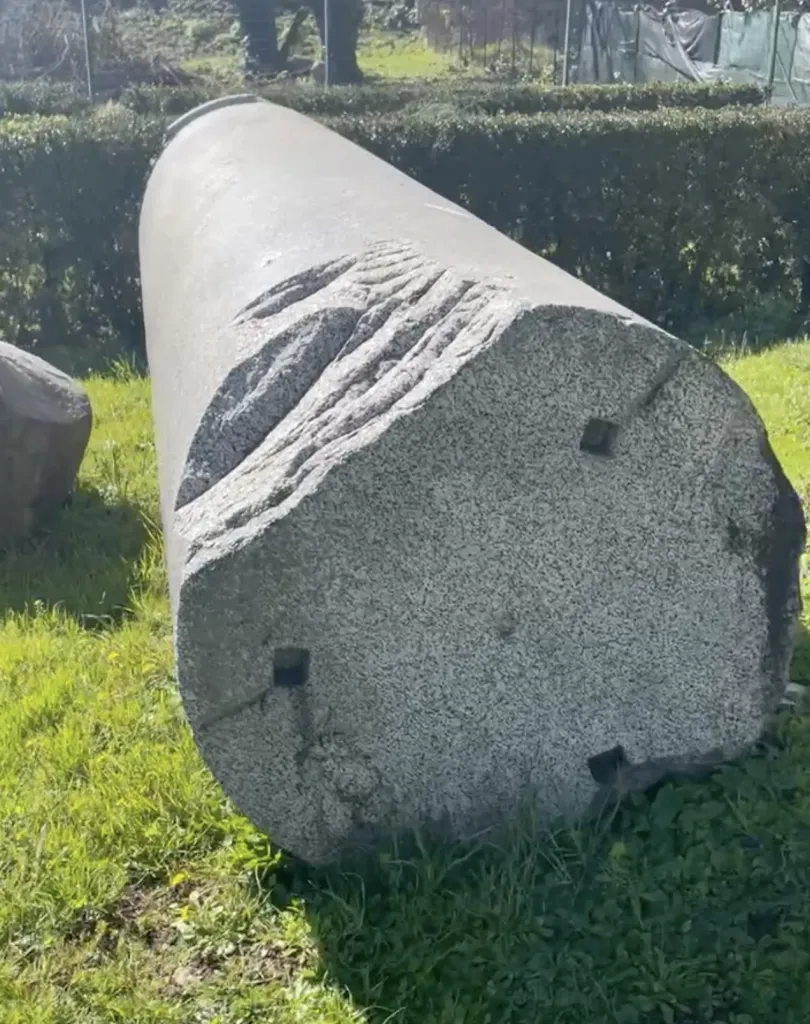
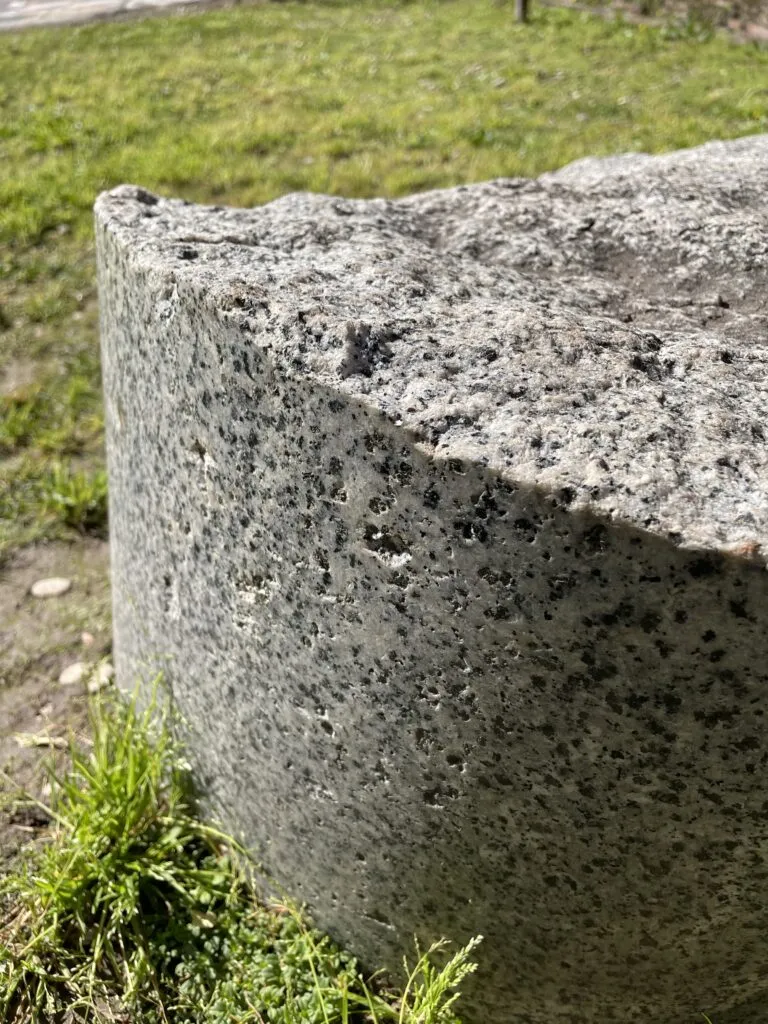
The excavations that brought them to light date back to the 19th and 20th centuries.
The granite columns in ancient Rome played an important role in asserting the power of the city and mostly came from the pink granite quarries of Aswan, in Egypt.
The columns decorated the large spaces of the natatio (the outdoor pool), the frigidarium, and the calidarium. They were part of an architectural set designed to impress: huge, smooth, shiny, perfectly crafted.
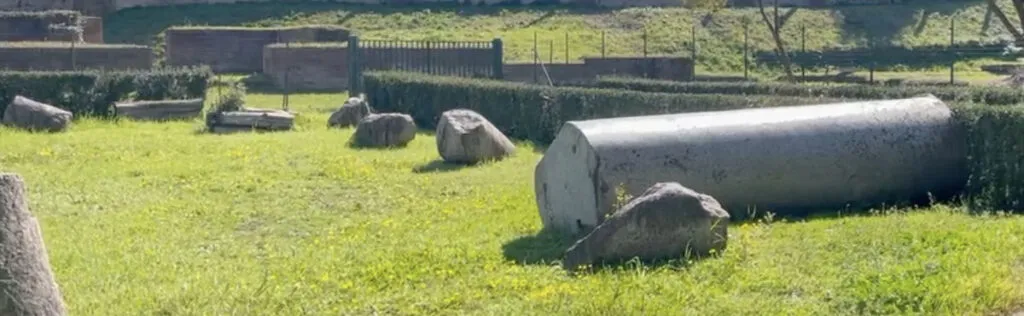
Granite and sometimes entire columns we see in Rome and around the world, sometimes come from faraway places, in terms of location and history
After the abandonment of the baths in the 6th century, many columns were broken for their material or directly removed and taken elsewhere, to other structures such as churches and Renaissance buildings.
It’s fascinating to think how some Renaissance buildings we see today around Rome feature granite, and in some cases, entire monolithic columns that originated in ancient Egypt. A historical phenomenon that, in some cases, is saddening, considering the impossibility of highlighting the original majestic works in the right places, but at the same time allows us to observe today the traces of lost civilizations.
We can’t know for sure whether some of the columns we see at the Caracalla Baths were transported intact as we see them, or if the granite was extracted from Egypt and then worked in Rome; so it’s fair to leave both possibilities open. What we do know is that from ancient Rome (and Greece) onward, the material preferred for crafting was marble, and imposing blocks were eventually cut into pieces and then placed and raised again. It is also worth emphasizing that the relationship between ancient Rome and Egypt was very good, for example, consider the relations with Cleopatra. As enthusiasts of the ancient world, we must acknowledge the importance of places and museums in major cities around the world that have preserved objects that might otherwise have been lost forever.
To conclude, here you can find an interesting in-depth article on the hardness of rocky materials, according to the Mohs scale, considering that marble is between 3 and 4 on the scale, and granite is between 6 and 7.