
The Levantine polygonal walls are ancient structures built with large irregular blocks skillfully fitted together without mortar. They are found across several sites in the Syro-Palestinian region and, although generally dated between the Iron Age and the Hellenistic period, they display features that some research links to even earlier building techniques developed within Eastern Mediterranean communities and possibly transmitted through cultural continuity.
A particular feature that continues to generate debate among archaeologists and scholars of ancient “enigmas” concerns the choice of polygonal blocks over more common rectilinear forms. In some sections, the precision of the joints and the variety of angled surfaces recall construction patterns also observed in other Mediterranean areas — from Greek Cyclopean walls to defensive systems in central Italy — suggesting that this technique may belong to a very old engineering heritage whose diffusion is not yet fully understood.
The presence of similar structures in distant sites belonging to different cultures fuels hypotheses about how such knowledge was transmitted. Some scholars propose a process of parallel evolution, others the movement of itinerant builders, while another line of research focuses on the possibility of a shared technical root dating back to the Bronze Age, when advanced systems for slope management, terracing, and fortification developed in the Levant.
Main Features
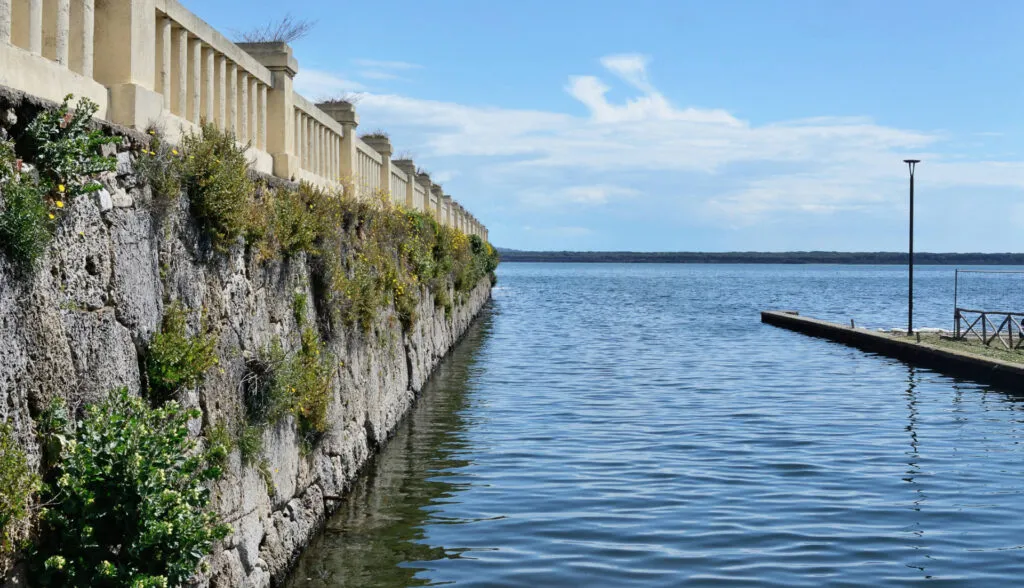
The blocks, often polygonal in shape and worked to fit together precisely, suggest a high level of technical expertise. Their surfaces appear surprisingly regular, while the joints reduce the need for binding agents. This technique ensures seismic stability and adaptability to the rocky outcrops typical of the Levantine landscape.
One of the most debated aspects concerns the use of multiple, non-repetitive angles. Some archaeo-engineering studies suggest that such configurations could improve force distribution, while other scholars point out that such a complex procedure implies a consolidated technical tradition, perhaps derived from construction practices already known in the Bronze Age. Comparison with other Mediterranean polygonal walls raises questions about how this solution developed and spread among culturally distinct yet geographically connected communities.
The beveled surfaces and the ability to integrate blocks of various sizes continue to attract interest from engineers and researchers in the history of building techniques. Comparative studies have shown that the distribution of internal stresses in polygonal masonry may benefit from greater dissipation of loads — a valuable quality in earthquake-prone areas.
Possible Origins and Technical Continuity
Some Levantine communities may have inherited or reinterpreted construction methods already present in earlier periods, when the region’s agro-urban societies developed engineering solutions related to land management. This is not an attempt to attribute the walls to lost civilizations, but rather to recognize that complex techniques can persist over time through local building traditions, practical refinements, and intergenerational transmission.
Polygonal walls are part of a broader Mediterranean phenomenon that some scholars interpret as the result of a shared “construction language.” Yet certain elements remain unexplained: the choice to combine irregular angles, the ability to make complex surfaces adhere without mortar, and the presence of sections with particularly massive blocks. These aspects, often cited in studies addressing the enigmas of ancient archaeology, indicate that the technique was more sophisticated than what the remaining structures reveal.
Meanwhile, anthropological research highlights how certain construction techniques can survive for centuries, maintained by specialized groups or transmitted through exchange networks. This could explain why similar solutions emerge in seemingly unrelated contexts, even if definitive evidence of their transmission paths is still lacking.
What to Look for On Site
During a visit, one can observe tight joints, shifts in masonry patterns, blocks of varying dimensions, and sections that combine polygonal construction with rectilinear courses. Some sites also show quarry marks and tool traces compatible with metal implements already widespread in early Levantine cultures.
In some areas, it is possible to see blocks with surfaces angled in multiple directions — a feature that scholars of ancient geometry consider indicative of advanced three-dimensional planning skills. Even so, direct evidence of the working phases is lacking, fueling interest in technical reconstruction and leaving several questions open.
The walls are often located in scenic spots or on strategic slopes. This makes it possible to examine the relationship between structure and landscape, offering further clues about the urban and military planning principles of ancient Levantine communities.
Location and Accessibility
The walls appear in various contexts: city enclosures, retaining platforms, and hilltop fortifications. Accessibility differs from site to site; in some cases they are part of archaeological parks, while in others they remain integrated into the rural landscape. Uneven paths and irregular surfaces require care and suitable footwear.
Some archaeological areas offer explanatory panels or marked routes, while others lack tourist infrastructure. A well-prepared visit helps interpret the masonry features and contextualize them within their historical and topographical environment.
Why They Matter
The Levantine polygonal walls represent a significant example of ancient engineering, offering insights into the continuity of construction techniques across the Eastern Mediterranean. They show how solutions of remote origin could be reinterpreted and adopted by later cultures, retaining their functional effectiveness and shaping the region’s historic landscape.
The presence of polygonal blocks in distant areas belonging to different cultures remains a topic of debate: there is no proof of a single origin, yet the recurrence of similar solutions invites reflection on technical exchanges more substantial than currently documented, or on cycles of shared experimentation among communities facing similar building challenges. This “gray zone” — well attested, yet not fully understood — is precisely what continues to make these walls one of the most intriguing elements of Levantine archaeology.