
Lato was an ancient city of Crete, characterized by a cyclopean structure built above an ancient volcanic crater.
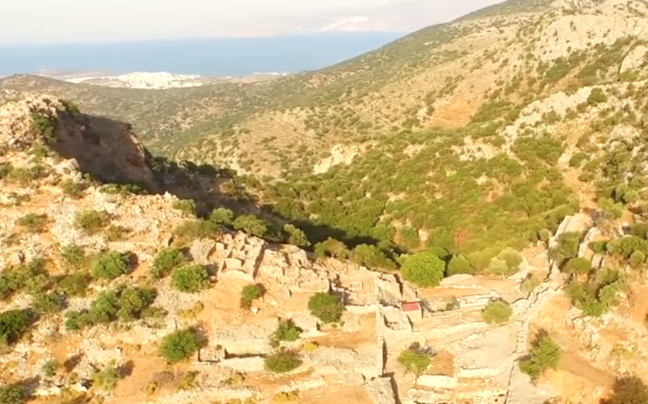
The polygonal walls are still visible today, although much of them was damaged by later civilizations, which reused them over and over again, moving them in such a way that the original shape was irreversibly lost.
The walls are older than any other structure on the site, such as the houses still present there, leaving us once again before the usual enigma in which all that remains of this ancient architectural style are just walls or platforms.
One aspect that makes the enigma even more intricate is the presence of two Latos, one on the ridge of the volcano and the other downhill, near the sea. This makes it very difficult to understand which Lato ancient authors were referring to in their accounts.
Only part of the stones are arranged with polygonal precision, probably precisely because of the continuous reuse throughout history, making it practically impossible to date them.
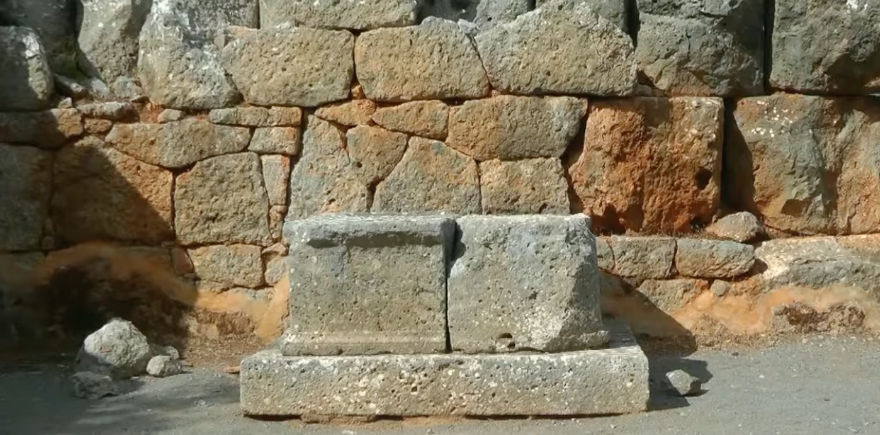
Today we know that the Minoans were the first culture of the area; the first to introduce writing, later inherited by the Mycenaeans, whose evolution corresponds to Ancient Greek. However, a close analysis of Lato’s walls leads to the clear conclusion that they were not the work of the Minoans, but of the legendary people known as the Pelasgians. The Pelasgians were an ancient and mysterious Mediterranean people mentioned by many ancient authors. Interestingly, according to some, their culture was also connected to the Etruscans.
In any case, even starting from this conclusion regarding the Pelasgian origin of Lato, it is anything but easy to trace back to its construction period. In fact, more than difficult, today it is unfortunately not possible to date these walls, as often happens with ancient cyclopean structures.