
Near Lake Sevan in Lchashen, Armenia, the burial of two infants was discovered beneath a dragon stone (Vishapakar)—a prehistoric basalt stele decorated with animal imagery and linked to the veneration of vishaps, mythological water dragons. Basalt has a Mohs hardness of 6–7.
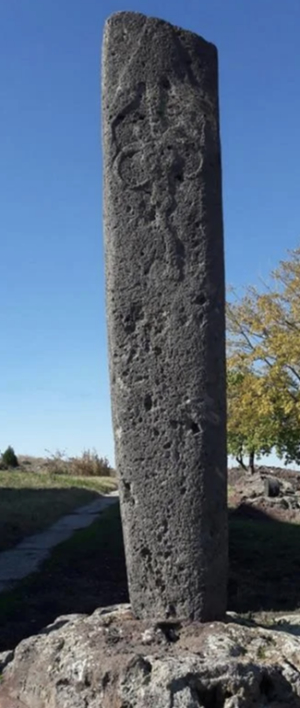
For copyright reasons, a thumbnail is shown here. To view the original image by A. Hakhverdyan / Journal of Archaeological Science, Reports (2024), visit Archeology News.
In the image on Archeology News, one can also observe the dragon’s tail, which features a curious spiral symbol.
Beneath the stele, a 16th-century BCE tomb contained the remains of the two infants (named Dragon1 and Dragon2), ceramics, bronze objects, carnelian and obsidian, and the bones of an adult woman.
The discovery reinforces the idea that dragon stones served not only a commemorative function but also a funerary one.